
A shower with weak water flow, another leaking pipe, or an unusually high water bill can leave you wondering what’s wrong with your plumbing. Sometimes these problems indicate aging water lines that need more than a quick repair. Whole-house repiping may be worth considering when problems keep returning. FL Plumber helps homeowners in Trinity, FL, understand their plumbing issues. Here are nine warning signs and how to tell when repairs might be enough. Concerned about your home’s pipes? Call FL PLUMBER at 727-269-7579 and let us take a look.
What Is Whole-House Repiping?
Whole-house repiping means replacing old or damaged water supply pipes throughout your home. Unlike a simple water line repair, which fixes one problem area, whole-house pipe replacement addresses a larger failing system.
The work typically involves hot and cold water lines connected to sinks, showers, toilets, and appliances. Drain and sewer pipes are separate and aren’t normally included. Professional piping services can help address damaged supply lines when repairs are no longer practical.
9 Signs Your Florida Home May Need Whole-House Repiping
1. You’re Dealing With Frequent Pipe Leaks
One leaking pipe doesn’t necessarily mean trouble throughout your home. But when leaks keep appearing in different rooms, your water lines may be deteriorating.
Repeated pinhole leaks, especially in older copper pipes, deserve attention. If you’re scheduling water line repair every few months, a plumbing inspection can help determine whether replacement makes more sense.
2. Low Water Pressure Is Becoming a Regular Problem
Does your shower lose pressure whenever someone turns on another faucet? Weak water flow across several fixtures may indicate buildup or corrosion inside your supply pipes.
However, low water pressure at one faucet could simply mean a clogged aerator or faulty fixture. Check the cause before considering repiping.
3. Rusty or Discolored Water Comes From Your Faucets
Brown, yellow, or reddish tap water can indicate rust developing inside older metal pipes.
If discoloration keeps returning, particularly at multiple faucets, your plumbing deserves an inspection. Water heater problems or work on public water lines can also cause discoloration, so don’t assume your pipes are responsible.
4. Your Home Still Has Old Plumbing Pipes
Some older Florida homes contain galvanized steel, polybutylene, or aging copper supply lines.
Galvanized pipes can corrode internally, while polybutylene has a history of unexpected failures. Copper may develop leaks under certain conditions.
Still, old plumbing pipes don’t automatically need replacing. Their material, condition, and repair history matter more than age alone.
5. You Can See Rust or Corrosion on Exposed Pipes
Look beneath sinks, around exposed fittings, and near your water heater.
Rust, flaking metal, greenish deposits, or unusual staining may indicate corrosion or moisture around connections. These signs don’t always require replacement, but they shouldn’t be ignored, especially when accompanied by leaks.
6. Your Water Bills Keep Going Up
A sudden increase in your water bill may mean water is escaping somewhere you can’t see.
Before blaming hidden pipes, check for running toilets, dripping faucets, and increased household use. The EPA’s household leak-checking advice can help you spot common sources of wasted water. If nothing explains the change, professional leak detection can help locate the problem.
7. Damp Walls or Floors Keep Appearing
Water stains, damp cabinets, warped flooring, and musty smells may signal leaks behind walls or beneath floors.
Even a small concealed leak can cause damage over time. Have unexplained moisture investigated promptly rather than waiting for another visible leak.
8. You’ve Had More Than One Slab Leak
Many Florida homes sit on concrete slab foundations, with some water lines running beneath the floor.
Repeated leaks in these buried pipes can make repairs disruptive and expensive. If slab leaks keep returning, rerouting damaged supply lines or considering whole-house repiping may offer a longer-term solution, especially when the cost of slab leaks continues to add up.
9. You’re Spending Too Much on Repeated Plumbing Repairs
Small plumbing repairs can become costly when they recur.
Consider how often you’ve needed service, whether the same pipe material keeps failing, and how much you’ve already spent. Replacing deteriorating lines may be more practical than continuing to patch separate leaks.

When to Repipe a House Instead of Repairing It
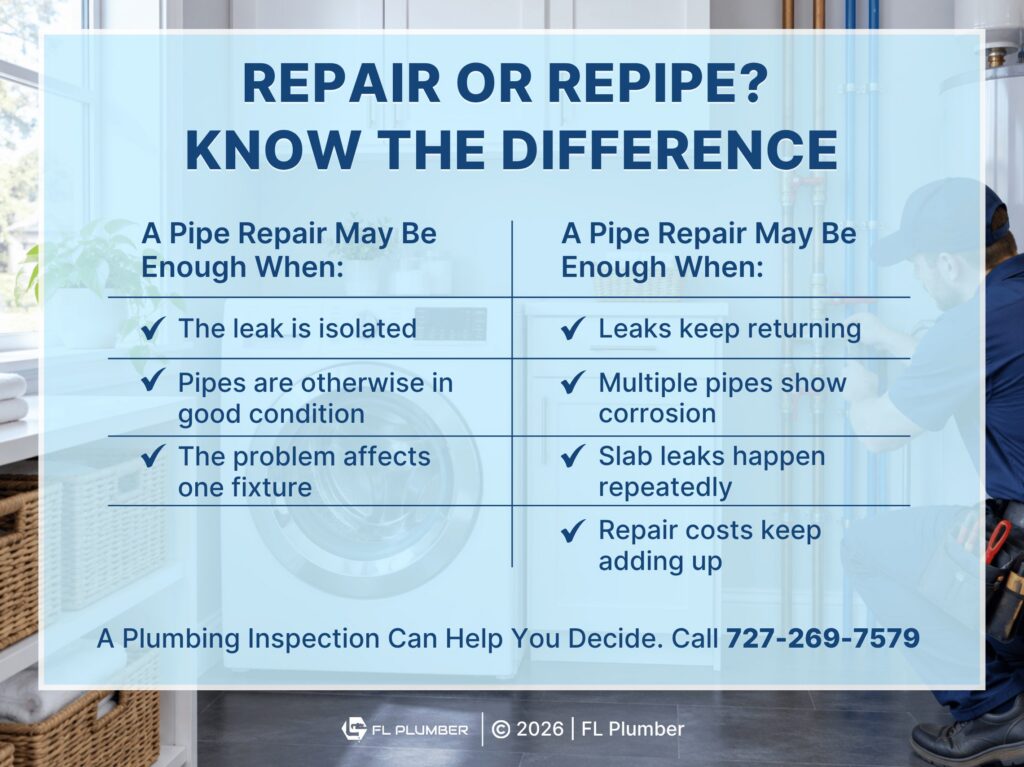
Knowing when to repipe a house depends on the condition of your plumbing and how often problems occur. A single leak may only require water line repair, but some issues can make whole-house pipe replacement a better option.
Consider repiping if:
- Leaks keep recurring: Different sections of your plumbing develop leaks despite previous repairs.
- Pipes show widespread damage: Corrosion or deteriorating pipe materials affects multiple water lines.
- Slab leaks happen repeatedly: Underground pipe failures continue causing costly repairs.
- You’re planning a remodel: Open walls provide a good opportunity to inspect and replace failing supply lines. This is especially useful when old pipes may affect a kitchen remodel.
Before replacing your pipes, have a licensed plumber inspect the system. FL PLUMBER can help you decide whether a targeted repair or full repiping makes more sense for your home.
Common Questions About Whole-House Repiping
Can low water pressure mean I need new pipes?
Yes, especially when several fixtures have poor water flow. However, clogged fixtures, pressure regulators, and other issues should be checked first.
Do old plumbing pipes always need to be replaced?
No. Well-maintained pipes can remain serviceable for years. Their condition, material, and history of leaks are more important than age alone. Regular plumbing maintenance can help identify problems before they become serious.
How much does whole-house repiping cost?
Costs depend on your home’s size, number of bathrooms, pipe materials, and the ease with which plumbers can access existing lines. An inspection helps establish the scope and pricing.

Talk to FL PLUMBER About Repiping in Trinity, FL
Not every plumbing problem calls for new pipes. Sometimes, a straightforward repair is all that’s needed.
If you’re dealing with frequent leaks, aging pipes, or ongoing pressure problems, FL PLUMBER offers local plumbing services with a friendly approach and flat-rate pricing.
Looking for piping services in Trinity, Florida? Call FL PLUMBER at 727-269-7579 and let us take a look. We’ll help you understand your options before you decide on repairs or replacement.